The term “Activism” may sound new to many, but it’s simply when people express their political views online while “Slacktivism” refers to those who have an opinion on a certain topic, but chooses to remain somewhat silent. With the availability of social media platforms, a space for individuals to openly reveal their thoughts and opinions to perhaps form discussions, a question arises: is Social media helping or hurting the cause?

Firstly, social media platforms can be used to raise awareness. It is essentially a free-for-all platform to let individuals voice their own opinions regarding personal, public, or even political matters. The rise of social media allows movements, especially movements that are viewed as a sensitive thrive as it is a way to share the same experiences each individual has gone through. This allows a sense of reconnection, a communal/collective space, which can make people feel like they belong to a collective group, and think that they’re not alone – the thought of “you have a group of people who will back you up”.
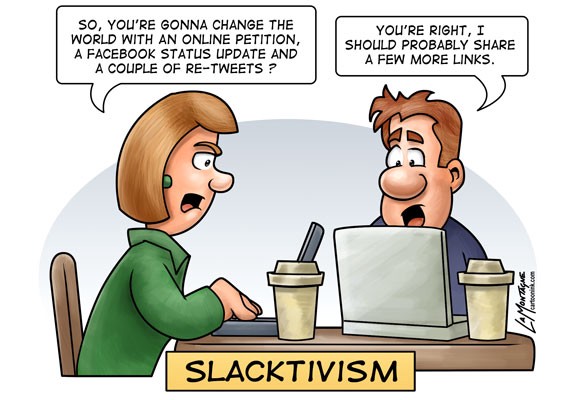
On the other hand, there are also individuals who do not want to express their opinions – slacktivists – and that is also their right. Some people are scared of other people’s point of view, thus they choose not to express themselves. What this could mean is that they do not want to be ousted, social media is filled with strong headed individuals, who are incapable of accepting ideologies that differs from what they believe in. If an individual disagrees, instantly the entire clan of social media jocks will bash them. Social media is a platform for users to express themselves. If used wisely and thoughtfully, it will not harm others. There are of course activists who use such platforms to advocate for a cause such as the “Black Lives Matters”.
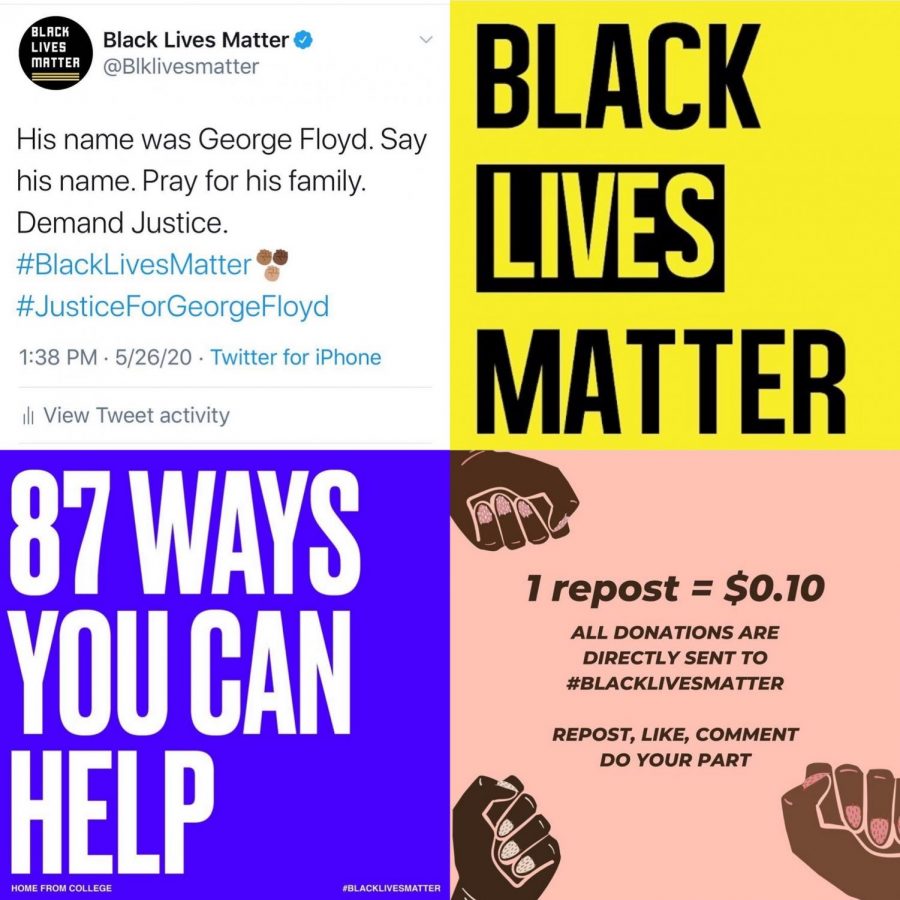
This is evident that social media has played a role in helping a cause, in which users from all over the world can participate. It was a movement that helped and impacted many people to become increasingly aware of what was going on in the world, especially with Black Americans and are advocating for what has to be done to make it right.

However, social media can also be a platform for the spread of false or fake news, which is not for a good cause. In this case, it is not the time for activists to do their part. An example is when Donald Trump was speaking incorrect information, which could spark hysteria.
This shows that at times, social media can do harm to society and hurt the cause. Here an individual with huge influence on society is abusing the power he has on his hands through social media platforms, which could be considered as unethical, whether it’s intentional or not.
Despite individuals having a point of view that is different from one another, if people remain open-minded and are willing to listen to other’s ideas that may not be completely the same as what’s on their mind, it could possibly expand on their knowledge and understanding on a particular topic. When one is strongly passionate in advocating for a cause, it does not necessarily mean that the opposing side is wrong. What this means is that although social media is a free platform that enables each person to express their identity and opinions, it is not necessary for conflicts to arise. Such platforms can be a peaceful, shared space for people to form thoughtful discussions that empowers one another. In order for this to happen, users of social media should always have respect for others’ opinions, even if it doesn’t align with theirs – this is to enable users to happily make use of the platforms and also to avoid a clash.
 Media and the Social World
